Bigger Cattle; Smaller Steaks

While the industry signals to producers to produce bigger cattle, consumers are signaling they want smaller steaks. How can the industry resolve the discrepancy?

Learn more about new cuts from the round and chuck here.

More About:

It’s a conundrum that’s been a long time coming, says Dale Woerner, Colorado State University meats scientist. Carcass weights are increasing at the same time consumers are looking for smaller portion sizes. It’s a situation that cattlemen and consumers have been adapting to, and dealing with, for 30 years or more.

But as new technologies and better genetics have come to the fore in the recent past, the trend toward larger carcass weights and therefore, larger retail beef cuts, has hit a higher gear.

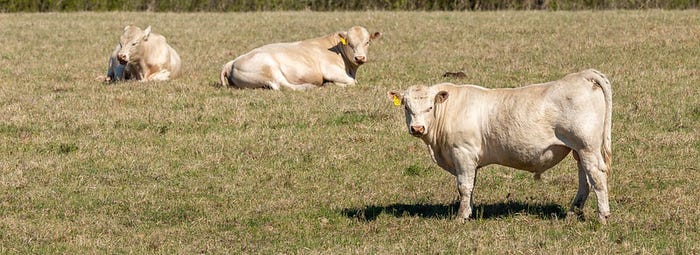
“We have a beef industry that is growing in the way of efficiency, but it’s shrinking in the way of numbers,” Woerner says. “And our industry is compensating for that by producing beef cattle that are larger in size in order to keep up with the demand for production. Consequently, we have larger animals that are producing larger subprimal cuts, including the rib.”

Just how big is “big?” Woerner says the recently released National Beef Quality Audit sheds some light.

One of the things the audit clearly pointed out is that while carcass weights and ribeye area are getting larger, the amount of variation from top to bottom is jaw-dropping wide. “We have carcass weights ranging from 400 lbs. to 1,200 lbs. daily in most cases in a packing facility.” That creates huge challenges for a retailer or restaurant trying to achieve some consistency in the portion size they offer consumers.

The average hot carcass weight in the audit was 818.5 lbs. “I can certainly recall in the early 2000s having to hunt to find cattle this heavy,” Woerner says. “Today, you have to hunt to find cattle that are less than 800 lbs. We’re certainly seeing a much greater amount of 800-, 900-, even 1,000-lb. carcasses on a routine basis.” So much so that most branded beef programs, including Certified Angus Beef®, have steadily increased their upper limit on carcass weights and now accept 1,000-lbs. carcasses.

Another Look: A Retailer Speaks On Beef, Consumers & The Future

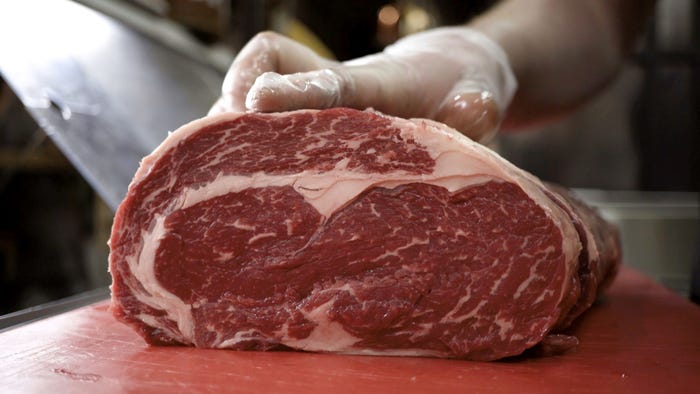
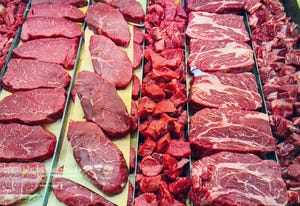
Bigger carcasses mean bigger ribeye areas. “The average ribeye area in 2011 was 13.7 sq. in.,” he says. “But the variation we’re finding is from a minimum of 4.4 sq. in., to a maximum of 28.2 sq. in. The 28.2-sq.-in. ribeye is literally the size of a lunch-sized plate.”

However, the majority of ribeyes now range from 11-16 sq. in., which is plenty big. “What does a 13.5-sq.-in. ribeye translate to in weight? It’s about 15-17 oz. The reality is that most of our consumers would not prefer ribeyes that large.”

Thus, the conundrum. “We don’t feel we’re going to make cattle smaller,” Woerner says. “So we have conceded as an industry to find alternative ways to cut these larger-sized products, and portion them down into more acceptable size products.”

Take the ribeye, for instance. “We can pull apart the ribeye roll and individually merchandise different muscle cuts,” he says. That’s done by separating out the main muscle and cutting it in half, producing steaks that resemble a tenderloin. “Then, cut those to 1½-in. thick and you achieve a positive eating experience for an 8- to 10-oz. steak."

The smaller muscle outside of the main ribeye is very tender and can be merchandised separately, adding value to the cut and providing an additional consumer choice at the meat case.

Beyond that, Woerner says cutting the ribeye into several individual cuts drastically reduces the kernels of excess fat that are present. “In this cutting strategy, we can remove those and improve the overall nutritional profile of the products. In our marketplace, with our consumers, improving the nutritional profile of beef is something we believe is going to contribute to the sustainability of our industry.”

Discuss this Article 11

Todd
on Jan 10, 2013

Smaller cattle in some instances may very well be just as efficient or more efficient than some of the larger cattle. It also takes less forage to keep those smaller frames fed. You can still have very good muscle production on small animals as well.

Robert Teague (not verified)
on Jan 11, 2013

That is why we have been switching from Beefmasters to Lowline Angus . More Ribeye per 100 pounds , and more pounds to the acre .

RhinestoneCattle (not verified)
on Jan 14, 2013

Exactly right. Case in point: the South Poll breed.

Jim Sturrock (not verified)
on Jan 10, 2013

As one who enjoys a good Prime Rib (Standing Rib Roast) slowly roasted under a bed of rock salt served w/ aujue and horse radish and spending 20+ years in the hospitality business approaching my 39th anniversary of my 39th birthday by being a cow/calf operator on short hard grass prairie understand environmental constrains. A 1400 pounder out on the range is approaching the upper limits for the ranch. Yet in the nurse cow portion of my operation I'll purchase 1600 to 1900 short solid cow in the third trimester for the calf in the oven, placing on a Holstein and returning the large cow to auction to become a Big Mac.The point being there will always be smaller weights for the hospitality industry who will, maybe not willing, pay more for the controllable portion size product to serve their guests, a 15 lb and under rib roast and the environmental landscape will work in harmony with them giving their portion size along with economics of the cow/calf operation on the Great American Desert.

Are there any who disagree? Please present your opinion.

Happy days, Jim

John R. Dykers, Jr. (not verified)
on Jan 10, 2013

Variety and flexibility are strong points for our industry. We can still apply our ingenuity to make "consistency" within each niche. Even cut the steak thinner! (I prefer 3/4 invh, but that is just me.)
Have just moved ahead a step to build a practical meat tenderness tester for economical widespread use. Will look toward this test supplementing marbling as a "USDA GRADE" tool to improve future customer satisfaction. Should make beef a more widely sought protein source and improve our prices no matter what size our cows. May even be able to use on live animals. we will see.
johndykersmd@dykers.com

Anonymous (not verified)
on Jan 11, 2013

we raise mini herfords therefore small portions

rdmuller
on Jan 11, 2013

I have seen this coming for a long time. I hate to see losses in technology and production efficiency dumped on this issue. Is there any chance the industry could come up with clever marketing names that would give these reduced size cuts a slightly different name so the customer will recognize what they are ordering in a restaurant (something different that petite, small, medium large). Don't go so far as "McRib" which has nothing to do with rib meat in pigs, but rather is prefabricated shoulder meat.

Graybull (not verified)
on Jan 11, 2013

Always amazing to me that so many equate bigger animals, heavier carcasses, etc with better genetics and efficiency. In all likely hood the opposite is true.......smaller animals tend to be much more efficient. Of course it is all in how you measure efficiency. Bigger is better is definitely NOT the case for genetic merit.

Robert Teague (not verified)
on Jan 11, 2013

Universitys have been calling for smaller cattle for years . The droughts should have been teaching this the hard way .We have been switching from Beefmasters to Lowlines with a vary noticble lower cost differince , even with the crosses . And more pounds of meat to the acre . Yes, it took some time getting used to seeing the smaller frames ,after looking at the bigger for so many years, but I am old enough to thank back to the 70's and remember the smallr frames we had then compard to now . What a BIG differance .

Robert Mathis (not verified)
on Jan 11, 2013

Finally we are starting to recognize that not all environments can or should an optimal size for packing plants, and various market segments. Woerner hints at a solution that should be obvious, the use of knife technology.

t (not verified)
on Jan 16, 2013

We raise Scottish Highlands which are smaller frame or I like to think of them as more traditionally framed. They take a little while longer to finish but virtually cost nothing to maintain even in drought. The industry always talks about consumers but we all know it is industry driven and not consumer driven.
t

Post new comment
Sign In or register to use your BEEF Magazine ID
(optional)

BEEF Newsletter Sign Up

Subscribe to Supermarket News Newsletter

Search 2.5+ million listings