-
Region I, Glenowen Farm, Round Hill, VA
Glenowen Farm sits at the foot of the Blue Ridge Mountains in Round Hill, VA, just 60 miles from downtown Washington, D.C. Yet despite the challenges of urban encroachment, the cattle operation’s rich history in the beef industry and dedication to sustainability will allow the Virginia Century Farm to stay in the cattle business for generations to come.
-
Region I, Glenowen Farm, Round Hill, VA
The close proximity to urban D.C. and Chesapeake Bay has driven the Thomas family to demonstrate an unparalleled commitment to sustainability. They worked closely with NRCS to develop a 10-year, best management practices plan that includes steps to reduce runoff, implement a nutrient management plan, and add over five miles of fencing to protect surface water from access by livestock. They also installed a new watering system to facilitate a rotational grazing program, which allowed them to better utilize grazing land and increase their herd size.
-
Region I, Glenowen Farm, Round Hill, VA
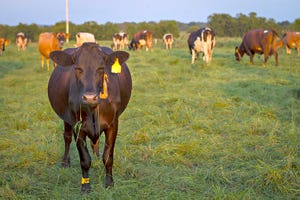
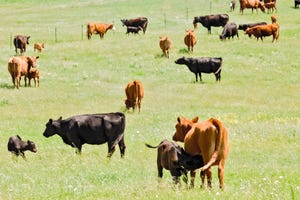
Founded in 1784, the 800-acre farming operation is home to 275 Angus cattle, with most of the beef sold as freezer beef to local consumers. The farm also produces all the required crops for feed, periodically selling excess bushel corn and orchard grass round bales.
-
Region I, Glenowen Farm, Round Hill, VA
Glenowen Farm also has made structural investments by renovating its 250-year-old homestead, constructing new cattle handling facilities, and placed a conservation easement on 400 acres to guarantee long-term use of the grassland.
“We’re very pleased with what we’ve accomplished here in the way of our stewardship initiatives, but I can tell you the more we invest, the more ideas that we get about future strategies of conservation,” explains Joe Thomas. That ongoing commitment to stewardship and land management will help ensure that many more generations of Thomases will be able to live out the farming legacy. -
Region II, Circle Square Ranch, Ocala, FL
E.L. Strickland, who has managed Circle Square Ranch for 37 years, runs 1,200 head of cattle on 9,000 acres in a very unique location. His fence-line neighbor is a retirement community and housing development in Ocala, FL.
-
Region II, Circle Square Ranch, Ocala, FL
“Circle Square Ranch is carved out of the middle of a huge development and they’re able to be right across the fence from obvious spectators and multitude of eyes looking over their shoulder,” explains Hal Phillips, DVM and Florida Cattlemen’s Association past president.
-
Region II, Circle Square Ranch, Ocala, FL
His unique neighbors have made Strickland a champion of environmental stewardship. Under his management, Circle Square Ranch excels in cattle production, growing forage crops, water quality, low environmental impact and wildlife habitat. They rotationally graze cattle and renovate pastures when needed by putting lime, calcium and nutrients back into the soil.
The ranch also conducts regular prescribed burns, which mimic natural fire frequency. Additionally, because there is no natural surface water, Strickland utilizes deep wells for the cattle and the neighboring retirement center supplies storm water for crops. Finally, he focuses on being a good neighbor. Circle Square Ranch is open to visitors to hike, walk and bird watch. -
Region II, Circle Square Ranch, Ocala, FL
“If you’re going to be in the cattle business and run a ranch, you have to look at everything and protect it,” Strickland says. “We are nowhere near done. When I leave this place, however I leave it, it will be in good shape.”
-
Region III, Funk Farms Trust, Shirley, IL
Funk Farms Trust is a shining example of how cattle and crops can successfully work together. Additionally, the Koons understand the importance of sharing their environmental story. They welcome many producer and consumer groups to visit the farm to better understand the successful conservation efforts.
“Funk Farms has always been a shining example of what conservation and stewardship could be and should be on farms and feedlots in the Midwest,” says Steven Foglesong, owner of Black Gold Ranch and a past NCBA president. -
Region III, Funk Farms Trust, Shirley, IL
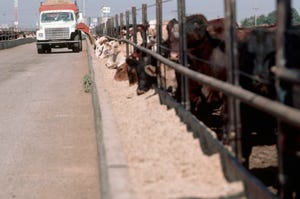
The Shirley, IL, operation dates back to 1824 and is now owned by Dan and Kathy Koons. Funk Farms Trust encompasses 2,175 acres, of which 1,700 acres are used for corn, soybean and hay production. They also intensively graze stockers and finish cattle in a mono-slope, covered feeding facility.
-
Region III, Funk Farms Trust, Shirley, IL
The two operations are designed to sustain each other. The crops produced are used as feed and bedding, while the manure produced in the mono-slope barn is composted and used as fertilizer for the next year’s crop.
-
Region III, Funk Farms Trust, Shirley, IL
Among the conservation efforts taken are: establishing 35 miles of waterways and 25 miles of terraces to prevent soil erosion; developing grass stands along hedgerows; and using no-till, minimal-till cropping systems.
-
Region IV, 77 Ranch, Blooming Grove, TX
Gary and Sue Price are the owners of 77 Ranch in Blooming Grove, TX, which lies 50 miles outside the Dallas/Fort Worth metro area. The operation has made grass management and stewardship education a top priority.
-
Region IV, 77 Ranch, Blooming Grove, TX
The Prices purchased their first section of property in 1976. Since then, they’ve pieced together nearly 2,500 acres – each property in its own stage of restoration. However, Gary’s wife, and their son Gary Lee, are quick to label Gary a “restoration specialist” and says he has a “knack for range management.”
br> Gary defines his focus on range management as this: “We like to look at it as we’re not trying to conquer this land, but learn to get along with it, see what it is trying to tell us and pass it along certainly better than we found it.” -
Region IV, 77 Ranch, Blooming Grove, TX
The Prices have developed enterprises in wetland and water development; wildlife management restoration, and leasing for bass fishing, waterfowl and upland bird hunting; and turkey population restoration. They also harvest 150 native pecan trees, in addition to utilizing rotational grazing and individual plant treatment and brush control that allow native grasses to thrive.
The effectiveness of their efforts was proven during the historic 2011 drought. When most producers in the state were culling cows, the Price family was able to sustain its entire herd by using their available forage and water resources. -
Region IV, 77 Ranch, Blooming Grove, TX
“Gary and Sue are consummate land stewards who lead by example,” praises Carter Smith, executive director of Texas Parks and Wildlife. “Their passion is for helping people of all ages understand how to read the land, how plants grow, why plant and animal diversity is important, and how working livestock producers who practice good stewardship protect natural resources important to all Texans.”
-
Region V, Bold Ranch, Winifred, MT
The diversified operation at Bold Ranch includes cattle grazing on native rangelands, no-till crop production and a custom cattle-feeding operation. The Bolds’ commitment to enhancing their natural resources includes a soil reclamation project to combat native saline seep lands by seeding a variety of plants with high salt tolerance. In doing so, they’ve converted nearly 400 acres of unusable grassland into productive winter and fall grazing ground, allowing them to considerably increase herd size.
They also installed 11 miles of pipeline to supply water to pastures unable to previously support cattle. And their ranch serves as a home to a thriving wildlife community and a significant elk herd. -
Region V, Bold Ranch, Winifred, MT
Robert and Annette Bold, owners of Bold Ranch, have a unique ranching story. Both are former teachers who decided in 1979 to leave their jobs and return to their ranching roots. In the three decades since, the Bolds, son Spencer, and daughters Alexandra and Regan, have developed a thriving and sustainable cattle operation in Winifred, MT.
-
Region V, Bold Ranch, Winifred, MT
The Bolds take whatever steps necessary to protect and preserve the land. Annette says her husband is “forward thinking” and “not afraid to try something new.”
Montana environmental groups praise the family’s stewardship efforts. “When you have a family like the Bold family who tries something new and is willing to work with the producers in the community, it helps get that technology out there to test it to make sure it will work in our environment,” says Lorna Philp, district conservation manager. -
Region V, Bold Ranch, Winifred, MT
Robert Bold believes stewardship is simply part of the business. “We’re just a steward here for such a short time, so you got to have that goal where you try to leave it so much better than when you got it.”
-
Region VI, Sparrowk Livestock, Clements, CA
Jack and Beverly Sparrowk are well on their way to leaving a rich ranching legacy in the West. Sparrowk Livestock is a first-generation cattle outfit located near Clements, CA. The husband-and-wife team operates their family ranching business on 85,000 acres spread across four different locations in California and southern Oregon. Their grazing land is a mix of owned, leased and Forest Service land.
-
Region VI, Sparrowk Livestock, Clements, CA
The Sparrowks are prominent industry leaders via their active participation in local and statewide organizations. And their efforts to forever protect their ranches for the next generations have encouraged others to follow their lead.
“The Sparrowk family is so committed to the cause of rangeland conservation that they were instrumental in the establishment of the Oregon Rangeland Trust,” explains Billy Gatlin, California Cattlemen’s Association executive vice president. “They have stewarded and protected their ranches for many years, and have taken the vital steps to ensure that succeeding generations will have the natural resources to continue the family’s proud tradition of cattle production.” -
Region VI, Sparrowk Livestock, Clements, CA
Today, the Sparrowk's have nearly 24,000 acres under permanent protection. Prior to their efforts in Oregon, the Sparrowks turned down development offers on a ranch they own in partnership with Bar One Ranch just outside Reno, NV. Instead, they placed the land in a conservation easement.
-
Region VI, Sparrowk Livestock, Clements, CA
Their stewardship efforts continue beyond legal documents, however. Range and water management are priorities on their cattle operation. “We are marketing our grass, our forage, through cattle. If we don’t have good grass and clean water, we won’t have very productive livestock,” Jack says.
To accomplish this, the Sparrowks have invested personal and cost-share funds in environmental improvements. The result is that miles of stream banks have been restored with willows, and check dams constructed improve wetlands, restore wildlife habitat and increase carrying capacity. -
Region VII, Slovek Ranch, Philip, SD
Bill and Pennie Slovek of Philip, SD, are committed to both the environment and their industry. The Sloveks run a family-operated, cow-calf and yearling operation on 13,000 acres of grassland in west central South Dakota. They also have 800 acres of hayland. The cowherd consists of 850-900 mother cows and 300 yearlings.
-
Region VII, Slovek Ranch, Philip, SD
The Sloveks have an eye toward every detail to care for the land on which their family and cattle depend. “Slovek Ranch has demonstrated intelligent and outstanding environmental stewardship,” writes Paul Flynn, NRCS state conservationist, in a letter of recommendation. “They have been a great example for neighbors and future generations.”
-
Region VII, Slovek Ranch, Philip, SD
Since cattle provide the ranch’s primary income, pasture and feed management are embedded in the Slovek Ranch management philosophy. At a time when grassland is rapidly being converted to row crop production, the Sloveks converted more than 800 acres of cropland back to pasture. They know that maximizing grazing opportunity is the key to their success and that decision allowed them to quickly improve their pasture health and cowherd.
-
Region VII, Slovek Ranch, Philip, SD
An important grazing tactic they’ve introduced is incorporating rest for grass growth to build plant vigor. A high-intensity grazing system results in a seasonal rotation of pasture, requiring each pasture to be grazed in a different season each year. Other stewardship efforts include: • Installing portable windbreaks to allow for seasonal flexibility in pasture. • Utilizing a controlled burn to combat invasive weeds. • Installing more than 25 miles of pipeline and 85 water tanks.
Seven diverse cattle operations, regional honorees of the 2012 Environmental Stewardship Award (ESA), will compete for the national award presented at the national cattle industry’s winter meeting in Tampa. FL.
Honoring producers who have been innovative environmental leaders, the ESA is presented annually by the National Cattlemen’s Beef Association (NCBA) and the National Cattleman’s Foundation. The program is sponsored by Dow AgroSciences and USDA’s Natural Resources Conservation Services (NRCS). Nominations for the 2013 awards are now being accepted. Learn more at www.environmentalstewardship.org.
Photos by NCBA.