Subscribe to Our Newsletters
BEEF Magazine is the source for beef production, management and market news.
In beef production, the cow-calf phase contributes the most greenhouse gases.
January 30, 2013
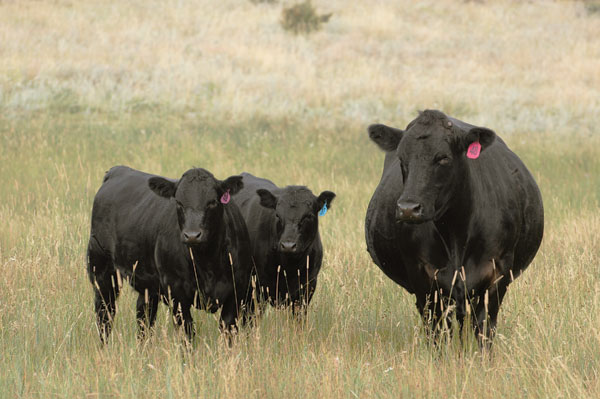
Scientists have long known that cattle produce carbon dioxide and methane throughout their lives, but a new study pinpoints the cow-calf stage as a major contributor of greenhouse gases during beef production.
In a new paper for the Journal of Animal Science, scientists estimate greenhouse gas emissions from beef cattle during different stages of life. They show that, depending on which production system farmers used, beef production has a carbon footprint ranging from 10.7 to 22.6 kg of carbon dioxide equivalent/kg of hot carcass weight.
According to study co-author Frank Mitloehner, an associate professor in the Department of Animal Science at the University of California-Davis, one source of greenhouse gases was surprising.
“If you look at everything that contributes to greenhouse gases through the beef supply chain, then it is the cow-calf that produces the greatest greenhouse gases,” Mitloehner says.
In the cow-calf phase, the cow gives birth and nurses the calf until the calf is 6-10 months old. During this time, the cow eats rough plants like hay and grasses. The methane-producing bacteria in the cow’s gut thrive on these plants.
“The more roughage is in the diet of the ruminant animal, the more methane is produced by the microbes in the gut of the ruminant, and methane comes out the front end,” Mitloehner says.
In feedlots, by contrast, cattle eat mostly corn and grains, which the methane-producing bacteria cannot use as effectively.
Methane is one of the most important greenhouse gases. Methane has a greater capacity to trap heat in the atmosphere than carbon dioxide.
The beef industry has been paying close attention to greenhouse gas emissions in recent years.
“We are doing a lot to measure and mitigate our impact," says Chase Adams, director of communications for the National Cattlemen’s Beef Association.
In a 2011 paper for the Journal of Animal Science, researcher Jude Capper showed that the beef industry today uses significantly less water and land than 30 years ago. The industry has also reduced its carbon footprint by 16.3%/billion kg of beef produced.
According to Mitloehner, beef producers can further reduce their carbon impact by using new technologies like growth promotants. However, consumers are often uncomfortable with these methods, and they choose organic beef or beef with reduced amounts of growth promotants.
“The technologies many consumers are critical of are those that help us receive the greatest environmental gains,” Mitloehner says.
The study by Mitloehner and his colleagues is titled “Carbon footprint and ammonia emissions of California beef production systems.” It can be read in full at journalofanimalscience.org.
You May Also Like
Enter a zip code to see the weather conditions for a different location.