AmericanCowman.com - Dedicated to America's family cattle operations.

Most Recent

Cow Calf Weekly

Subscribe to our weekly newsletter... It's FREE!

Online Exclusives

Pastureland Cool-Down

U.S. pasture values continue to rise but the cooling trend of 2007 continues.


         Subscribe in NewsGator Online   Subscribe in Bloglines

U.S. pasture values climbed an average 6% to $1,230/acre this year. That's sharply behind last year's 16% pace and extends a flattening trend that followed 2006's 22% spike in pasture values, according to USDA data.

Shrinking beef industry profits and a smaller U.S. cattle inventory have prompted market participants to turn more cautious in bidding up grazing-land prices. In addition, the sagging U.S. economy and extended housing slump have cooled recreational demand for pasture tracts.

Still, pasture prices have maintained their growth edge over cropland this decade, rising an average 11.1% annually, vs. cropland's 9.3% pace — thanks to earlier pasture-price surges driven by recreational buyers. Stock returns — as measured by the broad S&P 500 Index — have been essentially flat since the start of 2000 through this July.

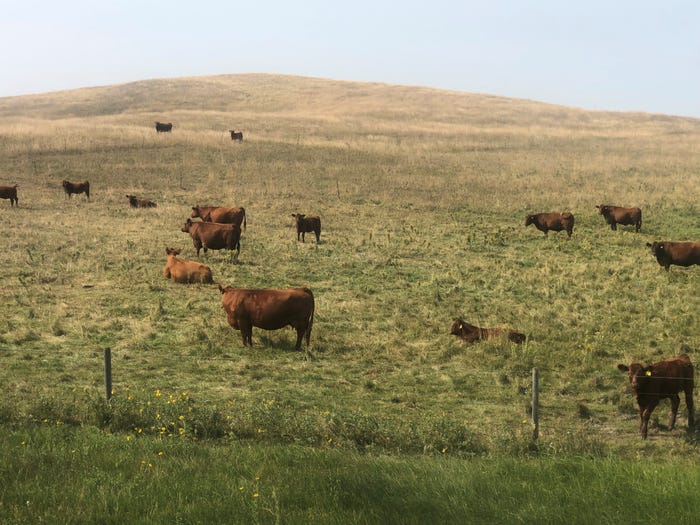
As non-agricultural demand for pasture tracts has eased, demand from livestock producers is accelerating as cattlemen move to offset high grain-feeding costs by putting on weight with lower-cost grazing. This corn-grass arbitrage play helped push pasture lease rates up 8.3% this year to an average $13/acre as cattlemen scrambled to graze feeder cattle to heavier weights before moving them into feedlots.

If high grain prices persist, demand for stocker cattle grazing could push pasture rents substantially higher in regional markets. This would help bolster pasture rent-to-value yields that have shrunk to an average 1% today, from 1.6% at the start of this decade.

King Ranch offers case study

To understand how high feed-grain prices are increasing demand for pastureland, consider how industry giant King Ranch Inc. exploited the current gap between feed grain and grazing costs: Last spring, when South Texas was still in the grip of drought, the ranching giant trucked 6,000 cattle as far as 873 miles to graze in Kansas, Oklahoma and North Texas rather than add another 250 lbs. of gain by running them through the ranch's feedlots.

Dave DeLaney, general manager of livestock and ranching operations, figured it would cost him 40¢/lb. of gain on grass for his 600-lb. cattle, vs. about $1/lb. if he ran them through the ranch's feedyard. Even after paying the $8/head freight costs to Kansas, DeLaney figures he turned what could have been a $60-$70/head loss to sell the cattle at 600 lbs. into a $30-$40/head profit by shipping the cattle to Kansas.

“When someone has to pay $5/bu. for corn to feed a calf, it's a whole lot smarter to let them run on grass a little longer,” notes Kevin Dhuyvetter, a Kansas State University economist. “Pasture values will keep going up because they are worth more for rental property.”

Dhuyvetter projects that if $5 corn persists, pasture rents could leap another 50% over the next couple of years and still offer a lower cost of gain than corn. This rent pressure will be driven in regions where there is a credible threat of raising stocker cattle on grass, he adds.

Nebraska is hot

The most heated market nationally for pastureland is Nebraska, where pasture values spiked 23% last year to $530/acre. Farmers looking to expand their existing farming and ranching operations continue to dominate the land market.

Market participants say there are two other primary driving forces behind this extraordinary land price gain in Nebraska. One is the recent demise of the state's ban against corporate land ownership. The other is the arrival of pension-fund and corporate investors whose purchases are triggering 1031 tax-deferred exchanges for trade properties, which ripple back into the ranchland market.

Consider this chain of events: In February, an entity affiliated with Wexford Capital LLC, a Greenwich, CT hedge fund and private equity firm, paid $52 million for 19,202 acres of mostly irrigated cropland in Lincoln County, NE. The seller — Don Oppliger of Farwell, TX — reinvested nearly $28 million of the proceeds through a 1031 tax-deferred exchange purchase of 7,551 acres of center-pivot irrigated cropland in Holt County, NE.

In June, Don Kilday, a seller of some of the Holt County cropland, used proceeds from his sale to pay $500/acre for a 16,000-acre ranch southwest of Dunning, NE. Typical Sandhills grass in this region was trading near $350/acre before Kilday's purchase. Oppliger paid an estimated $500-$1,000/acre above the market to assemble his Holt County exchange property, according to a knowledgeable source.

Buyer demand for Nebraska land so far shows no signs of easing. Osborne Cattle Company, a 17,591-acre Sandhills ranch north of Paxton along the North Platte River that was put up for sale in January, is under contract to sell for $11.5 million ($654/acre). Local observers had pegged the ranch's market value between $9 and $10 million.

Values fall in Southeast

Elsewhere across the country, pasture values posted double-digit, one-year gains in another 16 states, centered mostly in the Northern and Southern Plains and the Corn Belt.

The exception was the Southeast, where the Florida and Georgia land markets are contracting in the wake of a land-buying frenzy in which speculators fueled a 22% annual average price growth in Georgia and 25% in Florida between 2000 and 2007. Pasture values fell 4% last year in both states.

The combination of three years of drought, falling cattle profits and fewer Floridians looking for land in Georgia has softened demand for land, says Jeffery Peterson, a senior vice president at Southern Plantations Group in Albany, GA. Peterson looks for Georgia pasture prices to stabilize or move lower over the next year, depending on profits in the cattle sector.

In Texas, the country's biggest cattle ranching state, ranchland values rose 12.5% to $1,488/acre for the 12 months through June. That is off the 18% annual pace for June 2007, according a Federal Reserve Bank of Dallas survey of agricultural bankers.

The Texas rural land market appears to have entered a pullback from the rapid price run-up of the past five years, reports Texas A&M economist Charles Gilliland. The number of Texas rural land sales in this year's first half is down 38% vs. the same period a year ago, according to a Texas A&M University survey. Market participants report weakening buyer demand for large working livestock ranches.

See Associated Figure 1

See Associated Figure 2

See Associated Figure 3

Get Copyright Clearance Want to use this article? Click here for options!
© 2009 Penton Media Inc.

Browse Back Issues

BQS: View Details and Register Online!

American Cowman

www.AmericanCowman.com

Latest Jobs

Marketplace Ads

  • Hubbard Feeds, Inc

    Give us a call at (800)535-2428 to see if we can benefit your operation.

  • Hubbard Feeds, Inc

    Download free tools, sign-up for newsletters, browse nutrition products.

  • Your ad Here!

    Advertise your business here! Find out how.

  • Ag Maps for sale

    Ag Maps for Sale!

  • Livestock Markets

    The Place To Source Your Cattle and Horses.

Resources

  • Western Art Prints
  • Beef Quality Summit
  • 2007 Fencing Guide
  • 2008 Feed Composition Tables
  • Cattlemen's Calendar
  • Biosecurity
  • 2009 Alliance Yellow Pages
  • Estate Planning
  • Calf Health
  • RFID Suppliers
  • State of the Industry
  • Free Product Info
  • National Stocker Survey
  • Lets talk ag logo
  • National Stocker Survey