

Subscribe to Our Newsletters
BEEF Magazine is the source for beef production, management and market news.
March 2, 2012
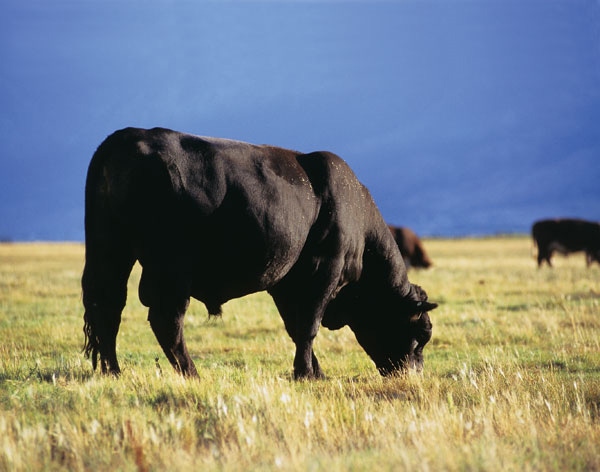
I received several emails last week questioning my comments about the increased value of genetics and whether one can justify the record prices we’re seeing for bulls. So, I spent some time looking at the numbers between bulls with very solid EPD profiles and comparing them to breed average bulls.
As much for simplicity as anything else, I assumed that a bull would sire 100 calves over its lifetime.
From personal experience, bulls with calving ease (CE) numbers in the top 10% of the breed can easily be expected to have three or more live calves out of 100, compared with an average CE bull. At today’s prices, that figure is conservatively $2,100 (using $1.40/lb. for 500-lb. calves).
It’s harder to put a good number on carcass traits – for instance, how much will an increase in intramuscular fat actually affect percentage of USDA Choice, or upper 2/3 of Choice?
Carcass weight is easier to value but, looking at the data, a bull in the top 20% vs. an average bull will easily return an additional $30. That equates to an additional $3,000.
The value of replacement females becomes very significant when you consider longevity, the added growth, added carcass, added fertility, etc. I believe those values will easily double the amount returned on the carcass front.
There are a lot of other traits like feed efficiency that also become significant. But ignoring all of them and assuming nothing more than the easily quantified traits, and assuming that all 100 calves are marketed, the value of the above-average bull compared to the average of a particular breed is over $7,500.
Trying to be even more conservative, let’s assume you only realize half that value. The bottom line is that if someone tried to give you an average bull, you still would be better off paying over $3,500 for that better-than-average bull.
In reality, when you try to put economic parameters to EPDs with today’s prices and feed costs, the better argument is that there should be more price spread on bulls than there actually is. As is the case with the commercial marketplace, it appears the higher-priced bulls are actually under-valued, while the lower-priced animals are overvalued.
You May Also Like
Current Conditions for
53°F
Mostly Cloudy
Day 72º
Night 50º
Enter a zip code to see the weather conditions for a different location.



.png?width=300&auto=webp&quality=80&disable=upscale)