AmericanCowman.com - Dedicated to America's family cattle operations.

Most Recent

Online Exclusives

Quest For Quality


         Subscribe in NewsGator Online   Subscribe in Bloglines

“When you come to a fork in the road,” observed the legendary Yogi Berra, “take it.”

Reeves and Betsy Brown can appreciate that advice, because that's exactly where they found themselves about 10 years ago — staring at a fork in the genetic road their 3R Ranch was on. They weren't sure which fork to take, but they knew they had to do something because the option of following the road they were on really wasn't an option at all.

How did they know that? Because they had just received a lesson in genetic reality that shook them to the very core of their beliefs. But after picking up the pieces and asking themselves some hard and painful questions, they took the high road. And that made all the difference.

For many years, the Browns produced the kind of calves the cash market demanded — big and growthy, with lots of muscle and gain potential. They weaned big, they gained big and, in a market geared to just rewarding pounds, they sold big.

The Browns were confident they were doing what they needed to do with their genetics. And in the cash market, where little or no information passes from one production segment to the next, they were.

But in an effort to realize all the profit potential their southern Colorado ranch could provide, they were among the first to join U.S. Premium Beef (USPB) when the organization launched in the mid '90s. They bought into the idea in 1996 and fed their first pen of calves shortly thereafter.

And that's when they hit the fork in the road.

Family cow operation

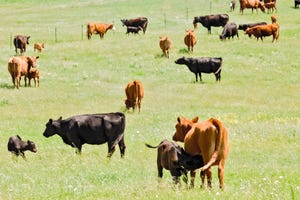
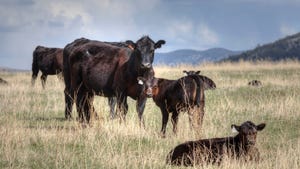
The Browns run a 650-head commercial-cow operation on 10,000 acres in southern Colorado near Beulah, about 25 miles southwest of Pueblo. They moved there in 1981 after ranching for years in Central Texas and began upgrading their mixed Brahman cowherd, using a variety of breeds before settling on a composite of Simmental, Gelbvieh, Red Angus and Hereford.

“They (the composite bulls) did a pretty good job of uniforming the cattle,” Reeves says, though the genetics also increased mature cow size. And even prior to joining USPB, the Browns were not new to cattle feeding. “We had been feeding cattle for several years,” he remembers. “Our calves off the ranch had gone to feedlots in the Texas Panhandle before we moved to Colorado, and we fed in three or four lots around the country. So we had an idea of what we were feeding in the way of performance. But we didn't get any carcass data back.”

They knew, looking down the road, that the industry was changing and ranchers who were positioned to take advantage of the emerging trend toward high-quality, high-value cattle would be better able to keep making the home ranch pay the bills.

So they bought into USPB and got ready to reap the rewards. What they got instead was an expensive lesson. Their first set of calves fell short of the quality-grade benchmarks the USPB quality grid demanded. Of five pens fed, the percent Choice per pen ranged from 38-51%.

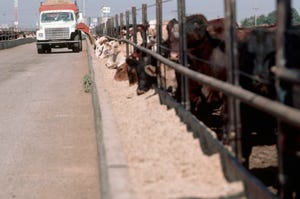
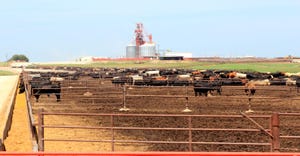
And that was not the first of the bad news. It started shortly after their cattle walked off the truck at Triangle H feedlot, a 4,000-head operation south of Garden City, KS. The calves started getting sick. And kept getting sick. “It was,” says Sam Hands, Triangle H owner/manager, “one of my more memorable health wrecks.”

And that's where the Browns and Yogi found common ground.

But rather than blaming the feedyard, the packer, the government, their state and national cattle organizations and anybody else they could think of, they started asking questions. And the answers they got put them on the high road they're still traveling today.

Help along the way

Betsy credits several people for helping them take the right fork in the road: Hands at the feedyard; Mark Gardiner with Gardiner Angus Ranch in Ashland, KS; Randall Spare, the Gardiners' veterinarian; and Marvin Hamann with Mesa Veterinary Clinic in Pueblo. “We've really tried to practice what they taught us and it certainly has benefited us,” Betsy says.

On the health side, working with Hands and veterinarians Spare and Hamann, they adopted an aggressive health program where they vaccinate at branding, pre-weaning and post-weaning.

“We wean them across the fence from their mothers, and that seems to be a very positive, stress-free condition for them,” Reeves says.

They retain ownership in 100% of their steers and cull heifers, backgrounding the calves on the ranch for 45 days before heading to a Kansas winter-grazing program on irrigated wheat.

On the genetic front, they're working diligently to reduce cow size while selecting bulls for carcass traits. “We're definitely in transition,” Reeves says. “We've got some cows that are still way too big. But you can see a predominance now of smaller cattle that have a neater, trimmer phenotype.”

Get Copyright Clearance Want to use this article? Click here for options!
© 2008 Penton Media Inc.

Browse Back Issues

American Cowman

www.AmericanCowman.com

Latest Jobs

Marketplace Ads

  • Hubbard Feeds, Inc

    Download free tools, sign-up for newsletters, browse nutrition products.

  • CattleStore.com

    To Order Livestock Supplies visit www.CattleStore.com or call toll-free (866)344-4094!

  • Verification

    Verification-- contact IMI Global at 866-442-5368,
    verified@
    imiglobal.com or visit usverified.com.

  • Your ad Here!

    Advertise your business here! Find out how.

  • Ag Maps for sale

    Ag Maps for Sale!

Resources

  • Western Art Prints
  • Beef Quality Summit
  • 2007 Fencing Guide
  • 2008 Feed Composition Tables
  • Cattlemen's Calendar
  • Biosecurity
  • 2007 Alliance Yellow Pages
  • Estate Planning
  • Calf Health
  • RFID Suppliers
  • State of the Industry
  • Free Product Info