Seedstock Newsletter Barn

Most Recent

Propose an Article!

Have an idea about an article or subject you'd like to see in BEEF? Submit a proposal!

Cow Calf Weekly

Subscribe to our weekly newsletter... It's FREE!

Online Exclusives

Recent Comments

Powered by Disqus

Proactive Passion

Wanting to avoid water regulations promulgated by non-cattlemen, Florida producers led by Mike Milicevic took a lead role in writing them.


         Subscribe in NewsGator Online   Subscribe in Bloglines  

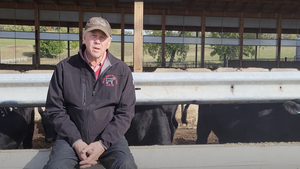
Learn about the 2008 Trailblazer in this special video.

With approximately 23% of the Lykes Bros. Ranch considered a wetland, one can imagine just how pivotal a role water management plays in the land-use decisions of this 337,000-acre ranch in south-central Florida.

But the operation headquartered in Okeechobee — and its general manager Mike Milicevic — have taken more than just a localized interest in managing their water resources to ensure water quality and guarantee the sustainability of the diversified family-owned operation. In fact, their efforts reach beyond their operational borders across the state of Florida, and one day may even reach across the nation.

That vehicle is “Water Quality Best Management Practices (BMP) for Florida Cow-Calf Operations.” Spearheaded by the Florida Cattlemen's Association (FCA) and drawn up in a unique partnership between producers and regulators, the draft manual will soon serve as both roadmap and vehicle to enhance and protect water quality in Florida. (See the 104-page draft plan at www.floridaagwaterpolicy.com/PDF/Bmps/Bmp_FloridaCowCalf2008draft22.pdf.)

The manual is heralded as a unique consensus document that outlines commonsense, economically and technically feasible production and management practices that enhance and protect Florida's water resources. It's designed specifically for Florida's cow-calf operations; it doesn't apply to concentrated animal feeding operations (CAFOs), which generally require a permit.

It is the result of efforts by cattle producers, government agencies and academia. A seven-person working group and a 15-member steering committee (see “Steering committee,” page T8 for members) shepherded the project begun in 2007 to revise a 1999 BMP manual produced by FCA. Milicevic is widely credited as the ramrod of both efforts.

“Mike has been the champion of this project, no question,” says Bo Hobby, a Williston, FL rancher, nutritional consultant and current FCA president. “Water quality is huge in this state, and Mike saw the importance of it and thought to ask: ‘How do we coexist rather than just digging in our heels?’ ”

Hobby says Milicevic's strengths are “level headedness and calmness in handling issues.

“He'll carefully evaluate an issue as to what it means, what is applicable and what is best for everyone. He takes a real structured, long-term approach — how will a decision made today affect us 10-20 years down the road?” Hobby says.

Gene Lollis, ranch manager for Buck Island Ranch (www.maerc.org), a neighboring operation, credits Milicevic for the manual's realization.

“We probably wouldn't have gotten it done without Mike,” Lollis says. “He's proactive, and he took it by the horns and stuck with it. He keeps the goal and the work in mind and keeps people on task. He's good at helping people to work together to come to a resolution, and not letting it get sidetracked.”

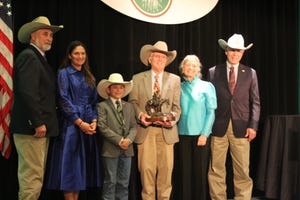
It's for that dedication and foresight that Milicevic is recognized this month as BEEF magazine's 2008 Trailblazer Award honoree. Sponsored by John Deere, the award is bestowed annually by BEEF editors to an industry individual or group whose volunteer contributions and farsighted leadership were instrumental in pushing forward significant research, programs or projects that benefited the industry and improved the production and profit environment for U.S. beef producers.

Proactive or reactive?

Milicevic grew up in Clewiston, on the southwest end of Lake Okeechobee, where his dad headed up cattle operations for U.S. Sugar. After a bachelor's degree in agronomy from the University of Florida, a master's degree in feedlot management from Texas A&M University and a short stint at managing a small Florida feedlot, Milicevic joined Lykes Bros. 22 years ago. He served as head of cattle operations until three years ago, when he became general manager of all Lykes Bros. agricultural operations, except citrus.

As a lifelong Florida resident and agriculturalist, Milicevic is well familiar with the dynamics of agriculture in the Sunshine State.

“Mike is a real steward of the land; an entrepreneurial, proactive person who gets things done,” says Max Irsik, a University of Florida Extension DVM. “He loves that ranch and will do everything he can to make it better. The BMP manual grew out of that dedication.”

With more than five million acres of improved pastures and 11 million acres of pasture and rangeland in Florida, Milicevic says both ranchers and the state want to properly manage pasture runoff. “The issue is whether to be proactive or reactive,” he says.

He says the tendency too often is to react, pushing against regulations and programs promulgated by outsiders. He says the BMP manual is “one of the first experiences of Florida cattlemen to be proactive on something and it's really been beneficial.”

For one thing, he says, the effort has basically kept the industry in the forefront of new technologies and ideas on water quality. It's also fostered better relationships and greater trust between producers and regulators.

The genesis came in 1995. As chairman of FCA's Environmental Committee, Milicevic ventured aloud that, in order to prevent CAFO-like regulations from being imposed on cow-calf operations by state authorities, FCA should look at writing its own guidelines.

“We didn't want any rules and regulations brought on us for cows in cow pens, and a Florida Department of Environmental Protection (FDEP) official had informed me they were coming. I asked him what we needed to do to circumvent such rules, and he said he'd rather have us write some guidelines to follow,” Milicevic says.

The idea was roundly criticized by some members, Milicevic recalls. “But the president at the time, Marty Smith, told me to go ahead. So we got a committee together and wrote the rules, and they were approved by FCA in 1999.” That manual, which Milicevic calls “the first environmental document put together by cattlemen for cattlemen,” helped lessen the regulatory burden.

Since then, other commodity groups within the state have produced, or are producing, similar manuals for their industries utilizing FCA's manual as a “blueprint.”

But with growing state regulatory pressure on water quality, FCA decided a revision was necessary. And again, Milicevic was called. The latest version, hammered out in countless committee meetings, sit-downs and field trips with state environmental and water management agencies, came “right down to the wire,” Milicevic says.

Flint Johns, who joined Lykes Bros. a year ago as BMP projects specialist, recalls: “In one particular instance, the night before we had to get the manual endorsed by the state association during the June 2008 convention, Mike and I talked into the night with FDEP and the Florida Department of Agriculture and Consumer Services (FDACS) trying to get it all worked out.”

Milicevic adds: “We couldn't give up any more than what we had, and it got down to the final hour to make a decision. We had to stick to what we knew was right and convince them that it was the right thing. It took a while, but we got it done.”

A BMP is a BMP if…

Inside that document is a chronicle of “practices, or combinations of practices that — based on research, field-testing and expert review — are determined to be the most effective and practicable means for improving water quality.” Included are BMPs on nutrient management, alternative cattle water sources, prescribed grazing, sediment and erosion control, water resources management, conservation buffers, fence installation, high-intensity areas, animal mortality, wellhead protection, wetlands and springs protection, prescribed burning and grade-stabilization structures.

“A BMP can't be called a BMP if it's not economical and technically feasible for the producer. That's the main guideline. If it's going to put us out of business trying to comply with water quality, it's not a BMP,” Milicevic says.

Bill Bartnick, FDACS environmental administrator in Tallahassee, says the document is now in the hands of FDEP. Under state law, that agency must verify the BMPs are protective of water quality.

Get Copyright Clearance Want to use this article? Click here for options!
© 2010 Penton Media Inc.


Acceptable Use Policy
blog comments powered by Disqus

Browse Back Issues

John Deere

Interact with us:

BEEF Magazine on Facebook BEEF Magazine on Twitter

View our Coverage OR View Movie Trailer Here

Marketplace Ads

  • Hubbard Feeds, Inc

    Give us a call at (800)535-2428 to see if we can benefit your operation.

  • Livestock Markets

    The Place To Source Your Cattle and Horses.

  • Your ad Here!

    Advertise your business here! Find out how.

  • Ag Maps for sale

    Ag Maps for Sale!

Resources

  • Western Art Prints
  • World Ag Expo
  • 2007 Fencing Guide
  • 2008 Feed Composition Tables
  • Cattlemen's Calendar
  • Biosecurity
  • 2009 Alliance Yellow Pages
  • Estate Planning
  • Calf Health
  • RFID Suppliers
  • State of the Industry
  • Free Product Info
  • National Stocker Survey
  • Lets talk ag logo
  • National Stocker Survey
  • BEEF Cartoons