
Subscribe to Our Newsletters
BEEF Magazine is the source for beef production, management and market news.
A beef industry already rocked by economic and environmental challenges could face another bump in the road late next week. Vote in our BEEF Poll on the furlough here.
February 21, 2013
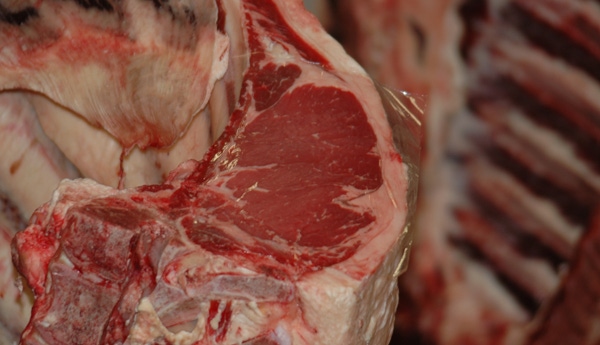
If tight supplies, high inputs, and weather worries didn't have U.S. beef producers nervous enough already, USDA Secretary Tom Vilsack piled on just a little bit more earlier this month. His Feb. 8 announcement that USDA might furlough Food Safety Inspection Service (FSIS) personnel for 15 days to achieve cost reductions required by sequestration unless lawmakers agree to spending cuts before March 1, helped to pressure the cattle markets.
Groups like the Texas Cattle Feeders Association (TCFA) and the American Meat Institute (AMI) quickly reacted to Vilsack’s announcement. TCFA exhorted its members to contact their elected representatives, and AMI fired off letters to Vilsack and President Obama.
J. Patrick Boyle, AMI president, pointed out that: “The U.S. government has a statutory obligation to provide meat and poultry inspection services.” Thus, he says, "It is incumbent upon the Secretary to examine the options available and develop a plan to provide inspection services, e.g., furlough non-essential agency personnel, in order to satisfy the duty imposed on him by the Federal Meat Inspection Act and Poultry Product Inspection Act."
A Closer Look: USDA Says Meat Inspectors Might Be Furloughed
Glynn Tonsor, Kansas State University economist, said during his quarterly economics webinar sponsored by BEEF on Feb. 14 that perhaps the situation was overhyped.
"There is concern on what exactly sequestration would do, but I think it’s a bit overhyped in the sense of live animals stacking up because we can’t process them. Rather than this general concern about supply chain disruptions, it does put a bearish tone on the current environment," Tonsor says.
NCBA: “A very real possibility”
But when I spoke to Colin Woodall, the National Cattlemen's Beef Association's (NCBA) Washington point man, on Feb. 18, he was preparing for the worst. "On a scale of 1 to 100, based on our meeting with USDA on Feb. 15, we're probably at about a 95 in terms of this going through. The question is more of how it will be implemented," he says.
Woodall says Vilsack's initial comments simply alluded to a 15-day furlough. "But talking to USDA staff, there may be a way to mitigate the pain by, instead of going to 15 consecutive days, they perhaps do 1-2 days/week for a period of weeks."
One factor buying the food industry time is that union agreements would likely delay a furlough for at least 30-45 days. "The inspectors have to be notified in writing, so it could be the middle of April before we would see the program implemented. The chance of 15 consecutive days look less likely, but the alternatives are still upsetting," Woodall says.
Woodall says his office has been talking directly with Vilsack. “We're also talking with FSIS, and the House and Senate ag committees to make sure they understand what this means for us. We’re asking them to get engaged, pressure the Secretary, and we’re working with their leadership to see if we can find a way around these prospective cuts.”
Woodall says that in his meeting with Vilsack, the USDA Secretary claimed he doesn’t have flexibility in where his agency makes the needed cuts.
“We brought up the 1995-96 government shutdown under the Clinton administration and the fact that even during that time they had discretion. They couldn't give us a hard answer as to why (the situation is different now). I think they're just playing a political game and trying to get the anger focused on Congress. I think that, if pushed, USDA would have the discretion to take cuts from other places out of USDA and not FSIS.”
In fact, some within Washington were speculating on Thursday that House Republicans were looking to pass a bill to give departments and agencies some maneuverability on program cuts. Whether such a measure would pass Senate muster is another matter.
Congress, however, is in recess and won’t return until next week, which leaves just a few days before the March 1 deadline.
“This is a very real threat. When it started, we thought it might be an easy thing to get them to back down, but they are sticking to their guns so far,” Woodall says.
His advice to producers is to make sure they contact their senators and congressmen and send letters to USDA. “We’ve got to get out there and voice our opinion. This will make things difficult for everyone and we can’t let this happen. Outside of that, we need to make sure everyone understands that isn’t an idle threat, but a very real possibility.
“People need to be able to make marketing decisions, and the issue isn't just sequestration but also the fact that we are only operating on federal funding through the end of March. At the end of March, the continuing resolution that agriculture is under right now expires. We could be facing a one-two punch, the first one through sequestration cuts, followed by a situation when funding for the entire rest of the year is still up in the air.”
Scott George, NCBA president and a Cody, WY, beef producer, characterized Vilsack's announcement on an FSIS furlough as USDA using producers as pawns in its political wrangling with Congress. He’s right, of course. And the White House essentially backs up George’s contention in a fact sheet posted at whitehouse.gov, that is entitled “Examples of How the Sequester Would Impact Middle Class Families, Jobs and Economic Security.”
Describing how the furlough of federal inspectors “would impact middle-class families, jobsand economic security,” the fact sheet says, "These reductions could increase the number and severity of safety incidents, and the public could suffer more foodborne illness, such as the recent salmonella in peanut butter outbreak and the E. coli illnesses linked to organic spinach, as well as cost the food and agriculture sector millions of dollars in lost production volume."
You May Also Like
Enter a zip code to see the weather conditions for a different location.