AmericanCowman.com - Dedicated to America's family cattle operations.

Most Recent

Cow Calf Weekly

Subscribe to our weekly newsletter... It's FREE!

Online Exclusives

Dealing With Curly Calf

Technology and an aggressive, transparent discovery process mean Angus breeders and users of Angus genetics can manage Arthrogryposis Multiplex (AM) without sacrificing genetics.


         Subscribe in NewsGator Online   Subscribe in Bloglines  

Listening to the rhetoric surrounding the September announcement that Arthrogryposis Multiplex (AM) — a lethal genetic defect also known as Curly Calf — had been discovered in Angus cattle and was likely tied to one of its most used sires, you'd have thought the end of the world was at hand.

“It created a hysteria I'd never seen before among some seedstock producers,” says Mark Gardiner of Gardiner Angus Ranch (GAR), Ashland, KS. Evidence indicates the genetic disorder stems from a bull the Gardiners bred and raised named GAR Precision 1680; actually it goes back to that bull's maternal grandsire 9J9.

According to Precision 1680's performance record from the American Angus Association (AAA), nearly 10,000 direct sons and daughters are part of the breed's genetic evaluation. Multiply that by a likely factor of 30 or 40 and you start to grasp the number of descendents this bull has spawned within the breed.

Precision 1680 was one of the first Angus sires to bend the genetic curve, providing low birth weight but superior weaning and yearling growth. Born in 1990 and deceased for a decade, his progeny continue to be favorites of seedstock and commercial producers. He's stacked five and six deep in some pedigrees.

Every breed, every species, every individual contains recessive genes. Those genes are seldom expressed, however, and thus rarely known about, except for the most abominable luck.

In the case of Precision 1680, it was inadvertent propagation. His genes were being multiplied and magnified because of his genetic merit; no one knew he also carried the recessive gene for AM. In other words, you're not likely to uncover problems in bulls used for a season or two and then discarded by the industry.

The initial emotional reaction was understandable, stoked by past episodes with genetic recessive disorders like Snorter Dwarfism, which decimated entire herds and lines of Angus and Hereford cattle in the 1960s, or Mule Foot in the late 1970s. In the last two decades, no fewer than six of the most heavily utilized breeds have had to contend with genetic recessive disorders.

In those days, the only way to determine if an animal possessed the recessive gene in question was to line-breed him and try to create problems. With the DNA test for AM, producers can identify noncarriers within the affected line of cattle and use them without fear of propagating the recessive gene.

DNA test near completion

In March 2007, AAA received notice of a handful of calves born dead with bent and twisted spines, the phenotypic expression of AM. Necropsies and some of the calves were sent, at AAA's request, to David Steffen, a University of Nebraska DVM and a longtime consultant to AAA. He was unable to determine the cause as environmental, genetic or due to viral infection.

In April 2008, another nine calves with a similar condition were reported. Based on Steffen's recommendation and growing belief the abnormality was genetic, AAA alerted members on Sept. 5 and requested they report any problems consistent with AM. By Sept. 15, AAA received verbal and written reports on another 48 calves.

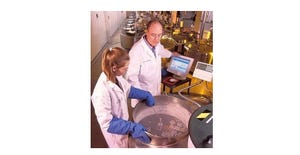
AAA then issued notice that the cause was likely due to a lethal genetic defect, via a simple mode of inheritance, and likely stemmed from Precision 1680. Jonathan Beever, University of Illinois molecular geneticist, was also working with AAA and Steffen and has shouldered developing a DNA test to identify AM carriers.

The Gardiners first encountered AM in 1991. That was a potential diagnosis provided by renowned Kansas State University geneticist Horst Leipold, when the Gardiners brought a stillborn calf to him that had a bent and twisted spine.

Since then, the Gardiners have bred and raised about 27,000 calves. Eleven were stillborn and anatomically abnormal; six had no Precision in their pedigrees. The veterinarians and researchers consulted determined the likely cause was environmental or disease-related.

It wasn't until August 2008 that Beever told the Gardiners he believed the cause was AM and likely stemmed from Precision. The Gardiners quickly provided semen and DNA on Precision descendents. More analysis was done.

By Nov. 3, AAA provided members a list of AI sires and their AM genotypes. Beever also enlisted the help of bull studs to help validate the DNA test via the sires they represent. They understandably wanted to know as much as possible as soon as possible to inform their customers.

All told, 761 Angus sires were tested; 60 bulls turned up carriers, all directly related to Precision 1680 and 9J9. That 8% says nothing about the actual gene frequency within the breed. Anecdotally, however, it suggests the gene isn't nearly as pervasive as some may have feared.

By Nov. 3, confidence was running high that a commercial test would be available within 45 days.

“With DNA technology, we've gone from not having a test two months ago, to having the tool we need to manage this deleterious gene,” says Doug Frank, ABS global beef product manager.

Managing with Curly Calf

The simple mode of inheritance associated with AM thus far, and the test for it, mean the condition is easily managed, especially for commercial users.

Many are familiar with coat color in Angus as an example of how the simple mode of genetic inheritance works. Red is recessive and black is dominant. If a calf receives the gene for black from one or both parents, its coat color will be black. In order for the animal to be red, it must inherit the recessive gene (red), from both parents.

So it appears to be with AM: the animal must receive the recessive AM gene from both parents to be afflicted, though inheriting the recessive gene from one parent makes the calf an AM carrier (see “Curly Calf genetics”).

“If I'm a commercial producer and I haven't line-bred, my risk is essentially zero,” Gardiner says. In other words, the odds of mating a carrier bull to cows that are also carriers is extremely low. For commercial producers mating Angus bulls to cows of another breed, or vice versa, there is no risk, even if the Angus being used is a carrier.

For seedstock producers, it's a matter of knowing the AM status of their genetics and those they intend to use. It's also a matter of understanding AAA preliminary guidelines regarding registration of AM carriers and noncarriers.


Acceptable Use Policy
blog comments powered by Disqus

Get Copyright Clearance Want to use this article? Click here for options!
© 2010 Penton Media Inc.

Browse Back Issues

American Cowman

www.AmericanCowman.com

Latest Jobs

View our Coverage OR View Movie Trailer Here

Marketplace Ads

  • Hubbard Feeds, Inc

    Give us a call at (800)535-2428 to see if we can benefit your operation.

  • Livestock Markets

    The Place To Source Your Cattle and Horses.

  • Your ad Here!

    Advertise your business here! Find out how.

  • Ag Maps for sale

    Ag Maps for Sale!

Resources

  • Western Art Prints
  • World Ag Expo
  • 2007 Fencing Guide
  • 2008 Feed Composition Tables
  • Cattlemen's Calendar
  • Biosecurity
  • 2009 Alliance Yellow Pages
  • Estate Planning
  • Calf Health
  • RFID Suppliers
  • State of the Industry
  • Free Product Info
  • National Stocker Survey
  • Lets talk ag logo
  • National Stocker Survey
  • BEEF Cartoons