Nutrition, forage quality and mineral needs get the bulk of attention during the summer grazing season, but water is livestock production's most essential nutrient. After all, cattle can survive weeks without food, but only a few days without water.
It's important that cattle receive a sufficient quantity of water each day to maximize feed intake, produce milk for the calf and maintain a healthy reproductive cycle. Research shows insufficient access to water reduces cattle's dry matter intake, which affects production across the board.
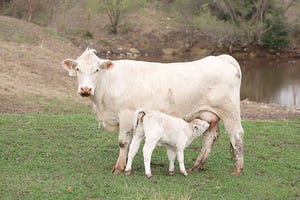
The quantity of water needed by cattle depends on air temperature, the animal's activity level, lactation and type of feed. As air temp, activity level and lactation increase, so does the animal's water requirement. A ration low in moisture, compared to a pasture ration of young vegetative grass, will require more water. The following chart from Beefalo Corral provides an estimate of the daily water needs for various classes of beef cattle under varying summer temps.
Daily water intake in gallons
| Type of beef animal | 70oF | 80oF | 90oF |
| 500-lb. calf | 6.5 | 7.4 | 10.6 |
| 800-lb. growing heifer/steer | 9.3 | 10.6 | 14 |
| 800-lb. finishing cattle | 10.8 | 12.3 | 16.5 |
| 750-lb. pregnant heifer | 9 | 10.3 | 14.6 |
| Dry pregnant cow | 10.8 | 12.4 | 17.6 |
| Lactating cow | 16.3 | 17.9 | 21.6 |
| Mature bull | 12.7 | 14.6 | 19.5 |
These figures are estimates, and take into account air temp and, to some degree, the animal's production level. But activity level, humidity and (for pastured animals) the pasture's moisture content can affect these numbers (some tables put the requirement for a lactating beef cow in 90° heat at 25+ gals. of water/day).
Meanwhile, Terry Mader, University of Nebraska-Lincoln (UNL) beef specialist at Concord, says in a UNL release that water is probably the best avenue to dissipate heat in cattle.
"Cattle don't have to be thirsty, but as cattle drink water and pass it through their body, it removes a lot of heat in the process," he says. Particularly in confinement situations such as feedlots, he adds: "It's important to have plenty of available water. When there's competition for water, it creates problems because the dominant animals will occupy waterer space and not allow other animals access."
For more on this topic, visit www.beefcowcalf.com and select "drought management" from the topics menu on the opening page. Another great article, "Livestock & Water" is available at: www.ag.ndsu.edu/pubs/ansci/livestoc/as954w.htm
-- Compiled from UNL news release and The Beefalo Corral