Most Recent

Cow Calf Weekly

Subscribe to our weekly newsletter... It's FREE!

Online Exclusives

Recent Comments

Powered by Disqus

Election Reflections From The BEEF Quality Summit


         Subscribe in NewsGator Online   Subscribe in Bloglines  

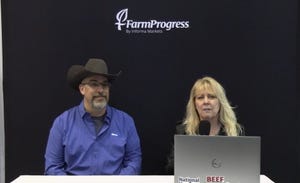
At last week’s BEEF Quality Summit, Burton Eller and Terry Stokes from the National Cattlemen’s Beef Association (NCBA) discussed the impacts of the election on issues relative to the beef industry. It was clear from an NCBA standpoint that the organization is making a very dedicated effort to be involved with the transition team, and ensuring cattlemen have a seat at the table.

From an ag standpoint, Obama probably represents less change than a McCain policy; the general farm framework isn’t expected to change dramatically under Obama. While ethanol policy will be under less scrutiny, energy policy certainly will be an Obama Administration focus.

Pundits are in agreement that the initial focus will largely be on the three Big E's – economy, energy and the environment – with the economy being the driving issue. In fact, at least initially, the policies on energy and the environment will be greatly influenced by their economic impacts.

While the issues affecting the cattle industry aren’t partisan issues per se, the election results will likely result in a much more difficult environment for cattle industry issues. Depending on your perspective, that statement can be a little disconcerting. After all, one might argue that, given the difficulty of the last several years for cattle-industry interests, things couldn't get much worse. Conversely, one could also argue that if we thought things were bad before, just wait.

Personally, I take comfort in the fact the new Congress and the Obama administration will be focused on the economy, and thus will be constrained by the unprecedented fiscal constraints imposed by never-ending bailouts. Next to the economy initiatives, which will initially focus on stimulus packages and spending the bailout dollars wisely, a lot of emphasis will go toward “paying back” organized labor, which raised unprecedented dollars for the last election. In just the last couple of weeks before the election, labor raised more than $80 million, and hundreds of millions in total. From that, we can assume the auto-industry bailout will be big.

We can expect a continued stalemate on free-trade agreements (FTA). Obama is likely to insist that all new agreements have both a labor and environmental pillar added to them, which will likely short-circuit the Colombian, Peru, Panama and Korean FTAs. There are many who advocate a European model for the economy, trade and the environment, which could result in an animal-welfare pillar being added to trade agreements, as well.

A few years back, Wayne Pacelle promised to build the political status of the Humane Society of the U.S. to one equivalent to the National Rifle Association. This past election, in which California Proposition 2 passed handily, indicates he may be close to his goal.

The anti-livestock components of the environmental movement achieved significant success as well, and climate change issues will be a primary concern.

Under Obama and a Democratic Congress, the Bush tax cuts will be allowed to expire, while any hope for the demise of the estate tax is now gone. The new focus will be on mitigating the impact of increased taxes and regulation on the industry. There’s also likely to be a renewed push to take food-safety issues away from USDA and combine FDA's and USDA's roles into one agency.

The bottom line is that – whether it be on trade, taxes, the environment, animal welfare, industry regulation, bio-fuels or simply rural America’s political clout – the winds are not blowing in our favor. Our views will largely be the minority position in the administration and in Congress.

The activist groups aligned against us are better funded and re-energized. As an industry we must both engage and educate, looking to create non-traditional alliances to gain political clout. As individual producers, we’ll have to be much more active in the political process than we have been historically, if we hope to mitigate the negative impact of new ag policies.

Perhaps our greatest positive comes from the fact that ag isn’t on the radar screen of priorities. Still, it’s important to understand that the Big Three of energy, the economy and the environment are pretty darn important to agriculture, as well.

Grassroots involvement will be huge in making sure our voice is heard. The key will be working inside the system to make sure our interests are understood.

Get Copyright Clearance Want to use this article? Click here for options!
© 2009 Penton Media Inc.


Acceptable Use Policy
blog comments powered by Disqus

Browse Back Issues

Interact with us:

BEEF Magazine on Facebook BEEF Magazine on Twitter

Marketplace Ads

  • Hubbard Feeds, Inc

    Give us a call at (800)535-2428 to see if we can benefit your operation.

  • Hubbard Feeds, Inc

    Download free tools, sign-up for newsletters, browse nutrition products.

  • Your ad Here!

    Advertise your business here! Find out how.

  • Ag Maps for sale

    Ag Maps for Sale!

  • Livestock Markets

    The Place To Source Your Cattle and Horses.

Resources

  • Western Art Prints
  • Beef Quality Summit
  • 2007 Fencing Guide
  • 2008 Feed Composition Tables
  • Cattlemen's Calendar
  • Biosecurity
  • 2009 Alliance Yellow Pages
  • Estate Planning
  • Calf Health
  • RFID Suppliers
  • State of the Industry
  • Free Product Info
  • National Stocker Survey
  • Lets talk ag logo
  • National Stocker Survey