AmericanCowman.com - Dedicated to America's family cattle operations.

Most Recent

About Harlan Hughes

A North Dakota State University professor emeritus, Harlan Hughes writes "Market Advisor," a monthly column in BEEF magazine, and he makes presentations at many state, regional and national beef industry events. He retired as the NDSU Extension livestock economist in 2000 and now lives in Laramie, WY.

Contact Prof. Hughes at 701/238-9607 or e-mail Harlan: harlan.hughes@gte.net.

Grab Your Partner


         Subscribe in NewsGator Online   Subscribe in Bloglines

Expect the formation of inter-sector alliances to get a boost over the next few years, says Kansas City economist Bill Helming. Like kids scrambling when the music stops in a game of musical chairs, such cooperation will help feedlots to fill pen space, and processors to maintain production volumes.

The impetus is overcapacity in both processing plants and feedyards, which is driving players in both sectors to ensure themselves of the raw supply of cattle they need in the face of a flat cattle inventory. The net effect, Helming says, will be further consolidation.

The problem for cattle-hungry feeders and processors is the overall U.S. beef cattle inventory — high-centered on the low point of the current cattle cycle — is expected to remain flat for the next 3-5 years. Exacerbating the effect are government-mandated production levels for ethanol. Not only has the demand surge for ethanol elevated the price of corn, but its inflationary effect on other costs has spurred a drive for increased production efficiency in all sectors.

John Lawrence, Iowa State University Extension economist, characterizes it this way: “The world in which we operate just changed. People developed their operational strategies based on farm bills that revolved around cheap grain. There is now competition for that corn and every producer needs to ask himself if his old strategy is appropriate for the new realities?”

Helming characterizes the ethanol juggernaut as “a demand-driven phenomenon with some permanency.” He says USDA projects corn price at the farm level to be $3-$5/bu. over the next 5-7 years. Add 70¢/bu. on top of that in delivered cost to the cattle feeder, or chicken and hog producer, and the impact is heightened.

Bottom line is the ethanol-driven corn market has changed the cattle cycle, says Harlan Hughes, “Market Advisor” columnist and a ranch business-management consultant.

“There's always overcapacity in the packing industry at the low part of the cattle cycle, but this is the first time in my career that I've seen what I would call a ‘broken’ cattle cycle. The normal cattle-cycle dynamics aren't working and we'll sit at these lower numbers for a time yet,” he says.

Just how long, he doesn't know, but says USDA doesn't expect any significant movement in numbers until 2011 or 2112.

“I think it will take the industry at least 2-3 years to adjust to the ethanol situation,” Hughes says. “We need to figure out how to feed cattle on forage longer and feed on grain for a shorter period.”

Helming expects the industry won't expand, and may even liquidate to some degree. With cow-calf producers, stocker operators and cattle feeders placing a higher priority on grazing for heavier in-weights, there will be less grass and native pasture available for beef cows.

“This factor alone will be responsible for beef cattle inventory numbers remaining flat at best, and increases the chances of our actually seeing a net decline over the next 3-5 years,” Helming says.

And if cattle inventory numbers are flat to declining, the effects of excess feeding and processing capacity will make it even harder for feeders to fill pens, and packers to procure the numbers to keep their lines operating efficiently.

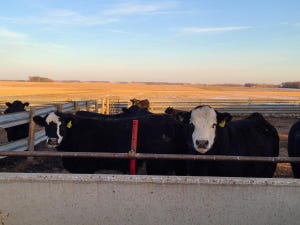
Feedyard trouble

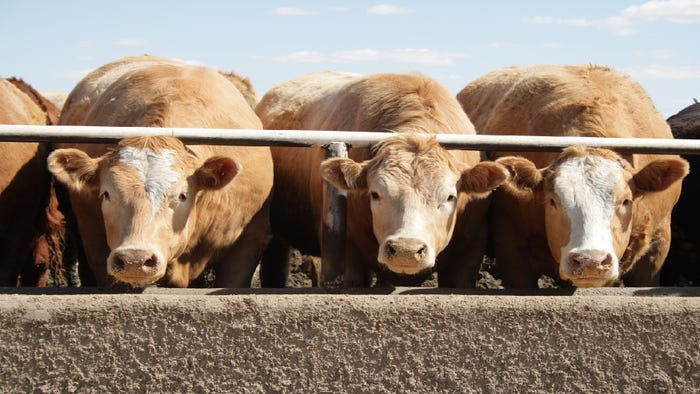
The feeding sector, in particular, is overbuilt, Helming says. He estimates that, at best, feedlot pen utilization in the U.S. is currently 65-75%.

“With elevated inputs of energy, elevated labor costs, obviously elevated grain costs and feedstuffs prices, and underutilized capacity, there's a real onus on feedyards to become more efficient. And the difference between running a feedyard at 60-75% capacity vs. running one at 85-90% is incredibly huge,” Helming says.

Get Copyright Clearance Want to use this article? Click here for options!
© 2008 Penton Media Inc.

Browse Back Issues

BQS: View Details and Register Online!

American Cowman

www.AmericanCowman.com

Latest Jobs

Marketplace Ads

  • Hubbard Feeds, Inc

    Give us a call at (800)535-2428 to see if we can benefit your operation.

  • Hubbard Feeds, Inc

    Download free tools, sign-up for newsletters, browse nutrition products.

  • Your ad Here!

    Advertise your business here! Find out how.

  • Ag Maps for sale

    Ag Maps for Sale!

Resources

  • Western Art Prints
  • Beef Quality Summit
  • 2007 Fencing Guide
  • 2008 Feed Composition Tables
  • Cattlemen's Calendar
  • Biosecurity
  • 2007 Alliance Yellow Pages
  • Estate Planning
  • Calf Health
  • RFID Suppliers
  • State of the Industry
  • Free Product Info
  • National Stocker Survey