Most Recent
advertisement
2007 BEEF Quality Summit Presentations
Where's The (quality) Beef?
“Are we filling the demand for quality beef today?”
The answer depends on with whom you talk, according to lead speakers of BEEF magazine's 2007 BEEF Quality Summit.
-
Jeff Savell, Texas A&M University (TAMU) meats scientist, says recent industry surveys show the percentage of USDA Prime and Choice is at the highest level since 1991.
-
Larry Corah of Certified Angus Beef says “no,” but the opportunity and profits are there to do so.
-
Angelo Fili of Greater Omaha Packing Company, a processor that harvests 15,000 cattle/week, gives a qualified “yes.”
-
Mike Connelly of the Ruth's Chris Steak House chain says, “just enough,” but it will be an ever-increasing challenge to meet future demand for high-end beef.
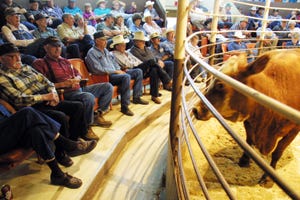
About 300 attendees gathered in Omaha recently to hear more than 20 industry experts address the topic, “Beef Quality In The Ethanol Era.” The quartet of Savell, Corah, Fili and Connelly set the stage for the following 1½ days of discussion by providing their thoughts on the supply and demand picture for “quality beef.”
But regardless of their stance on current supply, all speakers express concern about the potential effects on quality of some emerging feeding and management trends.
Savell, TAMU Regents Professor and E.M. “Manny” Rosenthal Chair, says that while popular perception is that production of Prime and Choice beef is on the wane, the 2005 National Beef Quality Audit (NBQA) tells a different story. He says the 2005 survey (Figure 1) found the highest percentage of Choice and Prime (57%) compared to previous studies in 1991 (55%), 1995 (48%), and 2000 (51%). He did allow, however, that the ideal vs. actual quality-grade consist, as uncovered by the 2005 NBQA, does indicate a need for more top Choice and Prime beef (Figure 2).
“I don't know what the 2007 number is, other than we're feeling the pressure that the (quality) number is going down. We feel the pressure of what ethanol production is going to do, too. But at the last measurement, that number was the highest it had been since we've been measuring it,” Savell says.
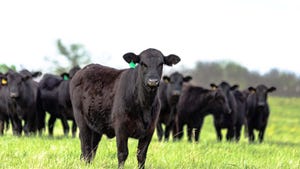
Two factors that are certain, he adds, is that cattle are “getting blacker and heavier.” According to the 2005 NBQA, black hide color controlled 56% of the market, with red making up 19%. Holstein was 8% (Figure 3).
“The percentage of cattle that are black keeps increasing. Part of that has come about simply because of the number of programs that have been put into place that reward or require cattle to have this characteristic,” he says.
Meanwhile, average carcass weights continue to climb, from 759 lbs. in 1991 to 787 lbs. in 2000. It's near 850 lbs. today.
In his “Survey Says” presentation, Savell summarized other points from three landmark beef-quality studies:
-
2005 NBQA,
-
2006 National Beef Tenderness Survey and
-
2006 National Beef Market Basket Survey (NBMBS).
He says the checkoff-funded studies found that:
-
Increasing weights of carcasses and cuts continue to be an issue for many in the industry.
-
Tenderness keeps improving with every subsequent survey (Figure 4).
-
Branded-beef programs where tenderness is measured or managed make up about half of beef marketed in those surveys.
-
Beef is leaner — with less external and seam fat — than ever before (Figure 5).
“The most common nutrition misperception about beef is related to its fat content. The 2006 NBMBS shows that the beef in our marketplace is leaner than ever before,” he says. Moreover, the true picture of beef's fat profile has been hampered by out-of-date USDA data. In fact, the 2006 NBMBS found a 34.7% reduction in separable fat compared to USDA data.
“We have product that looks great in the retail store, and it's leaner than it's ever been. From a foodservice and retail standpoint, a lot of it is performing quite well,” Savell says. “Our challenge is, as we produce beef, to think about who will consume it and what kind of products they want. Those of you in production must keep that in mind because that's what you're in business for.”
He urged attendees to study the retail counter. “If I had a dollar for every time I had a cattle producer tell me he never goes into a retail store because that's what his wife does, you would be shocked. Producers need to know what's happening with their products in the retail store, just as well as in food service. You need to go and see how it's being sold, cut and labeled,” he says.
CAB vice president Larry Corah initiated the program's supply-development program and currently oversees the production division of the world's number-one branded beef program. Today, 14,000 licensees worldwide sell more than 500 million lbs. of the CAB brand annually.
From CAB's perspective as a branded-beef company, Corah says the demand for quality-beef production in the U.S. is not being filled.
“But can we as an industry do that? Absolutely. And as producers, can you do it profitably? Absolutely,” Corah says.
He says the economic signals from consumers “have really blossomed” in the last half-dozen years.
“If the tonnage is available, we think that, as a company, CAB can hit 750 million lbs. of annual volume, which would represent about 2.5 million head of cattle,” Corah says. “That's the upside. We see a continued growth opportunity.”
He says consumers define beef “quality” first as a safe product. Next, while tenderness is a key part of the quality equation, flavor is clearly “the ultimate driver that we benefit from in the beef industry,” he adds. And it's one that can cover for other quality shortcomings. “When you reduce or lower that level of flavor, then tenderness becomes more critical in terms of the evaluation process.”
Research indicates carbonyl compounds located in intramuscular fat, or marbling, are a contributing factor to taste, he says. Thus, as USDA Quality Grade, which is determined by amount of marbling, increases from Standard to Prime, the likelihood of an acceptable eating experience increases. In fact, research shows the odds of an “unacceptable” eating experience (Figure 6) with a Select product is 1 in 4, while Low Choice is 1 in 6, Premium Choice (CAB level) is 1 in 20 and Prime is 1 in 33.
Want to use this article? Click here for options!
© 2008 Penton Media Inc.